Leave Your Message
🔋 New Energy Manufacturing Solutions

Battery Slitter For New Battery Factory Projects

Precision slitting technology powering the next generation of lithium battery gigafactories — from electrode preparation to full-line automation integration.

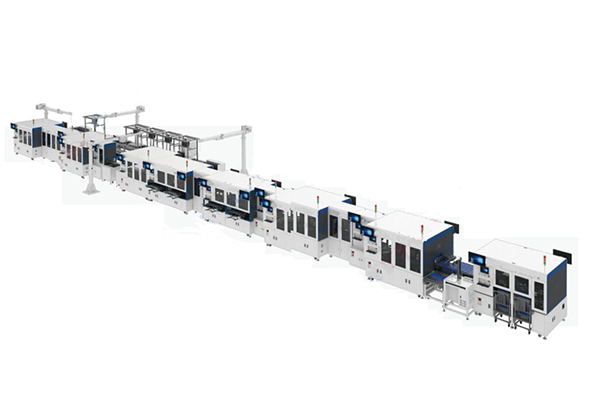
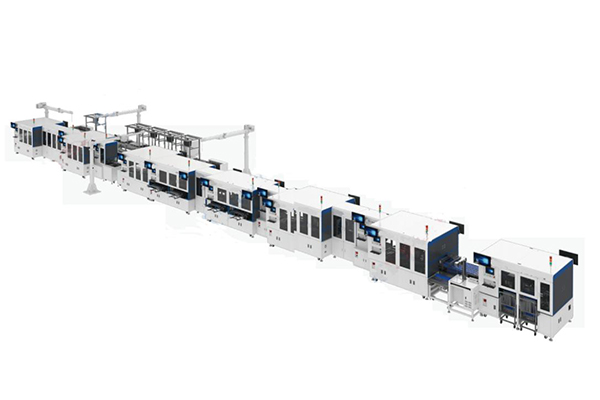
Battery Factory Assembly Line Solutions

Comprehensive battery module and pack production lines designed for new battery factory projects — from pouch cells to cylindrical and prismatic formats.

Global Battery Industry at a Glance

The battery manufacturing sector is experiencing unprecedented growth driven by EVs, energy storage systems, and clean energy mandates worldwide.

3.5TWh
Global battery demand forecast by 2030
🏭
400+
New gigafactory projects announced globally
📈
28%
CAGR of battery slitting equipment market
🌍
60+
Countries investing in domestic battery manufacturing

What Is a Battery Slitter & Why It Matters

A battery slitter is a high-precision cutting machine used in the electrode manufacturing stage of lithium battery production. It slices large rolls of coated electrode material — both cathode (such as LFP, NMC, LCO) and anode (graphite, silicon-carbon) — into precise, narrow strips that will later be wound or stacked into battery cells.

For new battery factory projects, selecting the right slitter is one of the most critical decisions in the equipment procurement phase. The slitting quality directly determines the consistency of electrode edges, which in turn impacts internal short-circuit risk, cycle life, and overall cell yield rate. Even a burr of just a few microns on the electrode edge can lead to cell failure during the formation or cycling stages.

🔬 Key Insight: In modern gigafactory environments, electrode slitting precision is measured in ±0.1mm tolerance or better. A world-class battery slitter must deliver consistent quality across speeds exceeding 80 m/min and roll widths up to 1,300mm — while maintaining near-zero blade wear and dust emission.

Modern battery slitters for new factory projects integrate servo-driven tension control, automatic edge alignment, real-time defect detection via vision systems, and seamless MES/SCADA connectivity. These capabilities are no longer optional — they are baseline requirements for any facility targeting automotive-grade cell production.

The Role of Slitting in the Battery Manufacturing Value Chain

The battery slitter sits at the intersection of coating and winding/stacking processes. After the electrode coating machine deposits the active material slurry onto the metal foil substrate and the calendering machine compresses it to target density, the wide electrode web must be slit into precise widths matching the cell design specifications.

In large-format prismatic or pouch cells destined for EV battery packs, the electrode width directly correlates with energy density and thermal management performance. Any deviation from the specified width profile — caused by poor slitting — cascades into stack alignment errors, tab welding inconsistencies, and ultimately, capacity variance across the battery module assembly line.

For cylindrical cell formats (18650, 21700, 4680), slitting precision becomes even more critical because the winding process operates at extremely high speeds, and electrode edge quality directly determines the winding uniformity and separator tension balance inside the jellyroll structure.

Deep-Dive Application Scenarios

Battery slitters serve diverse segments across the new energy ecosystem — each with unique precision, throughput, and integration demands.

🚗

EV Power Battery Gigafactories

Automotive-grade battery factories demand slitters capable of handling high-nickel cathode materials with superior edge quality. Integration with automated material handling robots and real-time SPC data reporting to MES systems is mandatory for Tier 1 OEM qualification.

🏠

Energy Storage System (ESS) Production

Utility-scale and residential ESS battery factories typically use LFP chemistry with wider electrode formats. Slitters here must handle thicker coatings and support high-volume, low-cost production targets with minimal downtime and fast changeover between roll widths.

🔬

Lab & Pilot Battery R&D Lines

For new battery factory projects starting with a pilot line, compact precision slitters allow researchers to validate new electrode formulations, coat weights, and cell designs before scaling to mass production. Flexibility for small batch runs is paramount.

🛩️

Solid-State & Next-Gen Battery Lines

Emerging solid-state battery factories require slitters adapted for brittle ceramic electrolyte films and ultra-thin lithium metal anodes. These applications push slitting precision requirements to ±0.05mm or tighter, with specialized blade materials and dust containment.

♻️

Battery Recycling & Second-Life Facilities

In the growing battery recycling economy, slitters are used to disassemble recovered electrode materials for black mass extraction. NMP recovery systems work in conjunction with slitting lines to reclaim valuable solvents, supporting circular economy goals.

📱

Consumer Electronics Battery Lines

Compact pouch cells for smartphones, wearables, and laptops demand the highest slitting precision for narrow electrode strips. Micro-level burr control and surface contamination prevention are critical to achieving the cell safety standards required by consumer electronics brands.

Key Trends Shaping Battery Slitter Technology in 2025+

As new battery factory projects accelerate globally, slitting equipment is evolving rapidly to meet new performance, sustainability, and digitalization demands.

01

AI-Powered Defect Detection & Process Control

Machine vision systems powered by deep learning now detect electrode coating defects, pinholes, and edge irregularities at line speeds above 100 m/min. AI-driven feedback loops automatically adjust blade pressure, tension, and speed to maintain consistent slit quality without operator intervention.

02

Laser Slitting for Next-Generation Electrodes

Laser slitting is emerging as a complementary technology to mechanical blade slitting, particularly for ultra-thin lithium metal anodes and solid electrolyte films. It eliminates mechanical contact stress and produces heat-affected zones that are negligible with femtosecond laser systems.

03

Digital Twin Integration for Factory Planning

New battery factory projects now leverage digital twin simulations to optimize slitter placement within the production line, model material flow, and predict maintenance intervals. This reduces the time from equipment installation to full yield rate achievement by up to 40%.

04

Wider & Faster: The 2-GWh-per-Line Challenge

Gigafactory economics demand slitters that handle electrode widths up to 1,500mm+ while running continuously at speeds above 120 m/min. Equipment suppliers are developing reinforced machine structures, dynamic tension compensation, and automatic roll splicing systems to meet these throughput targets.

05

Dust-Free & NMP-Compatible Enclosed Systems

With stringent worker safety and environmental regulations, modern slitters for new battery factory projects are designed as fully enclosed systems with integrated dust extraction, NMP vapor containment, and HEPA filtration — seamlessly connecting with NMP recovery systems downstream.

06

Modular Design for Flexible Factory Layouts

As battery manufacturers hedge between cell formats (cylindrical vs. prismatic vs. pouch), slitting equipment is increasingly designed with modular blade cassettes, quick-change tooling, and width-adjustable rewind systems — allowing a single slitter to serve multiple product lines without major retooling.

Commercial & Industrial Landscape for Battery Slitters

The global market for battery electrode slitting equipment is undergoing structural transformation. Driven by the EV transition, grid-scale energy storage deployment, and government-mandated battery localization policies in Europe, North America, and Southeast Asia, the pipeline of new battery factory projects has never been larger.

In China alone, battery manufacturers have announced over 1,200 GWh of new capacity additions through 2030. Each gigawatt-hour of capacity requires multiple high-speed slitting lines operating continuously across three shifts. The equipment investment for slitters in a 10 GWh greenfield factory can represent $15–30 million USD, making it one of the top-five equipment line items by value.

💡 Business Perspective: Equipment suppliers who can offer turnkey electrode process line solutions — combining coating, calendering, slitting, and winding in an integrated system with unified controls — are capturing a growing share of new factory project contracts, as battery manufacturers seek to reduce vendor complexity and integration risk.

Procurement Considerations for New Battery Factory Projects

When specifying battery slitters for a greenfield or brownfield battery factory project, engineering teams must evaluate: blade material compatibility with active material chemistry (NMC, LFP, sodium-ion), maximum web width and roll diameter capacity, slit width range and changeover time, edge quality specifications (burr height, roughness), dust and particle generation metrics, and OEE (Overall Equipment Effectiveness) guarantees.

Equally important is the after-sales service ecosystem. A slitter manufacturer who can provide local technical support, fast spare parts delivery, and remote diagnostics connectivity is often preferred over a marginally cheaper supplier with limited service infrastructure — especially for factories targeting 95%+ OEE from month one of production.

Integration with upstream coaters and downstream winders via standardized communication protocols (OPC-UA, MQTT) is increasingly a hard requirement. Battery manufacturers building towards Industry 4.0 factory architectures need slitters that participate actively in the digital thread — sharing real-time quality data, maintenance alerts, and material traceability information with the factory MES and ERP systems.

Corporate Philosophy

Welcome to learn more about us

🧠

Philosophy

Innovative tech services for customer success and employee fulfillment

🚀

Vision

Leading new energy intelligent manufacturing

🌱

Mission

Driving the development of new energy circular economy

Values

Honesty, pragmatism, pioneering spirit, pursuit of excellence

Pengjin Technology Chairman - Battery Manufacturing Expert
About Pengjin Technology

Chairman's Philosophy

Guangdong Pengjin Intelligent Equipment Co., Ltd. ("Pengjin Technology") is a national high-tech enterprise specializing in professional equipment solutions for the new energy recycling economy.

Our primary offerings include NMP recycling equipment, NMP distillation equipment, coating machines, and more. Committed to innovation, Pengjin Technology holds 13 invention patents and over 50 utility model patents. Our team of nearly 1,000 employees, with around 20% dedicated to research and development, ensures continuous technological advancement.

With the rapid development of the lithium battery industry, the efficient use of resources and the steady improvement of efficiency are the top priority of enterprise operation and development. Pengjin Technology adheres to the corporate mission of "driving the development of new energy recycling economy with technology" and provides more perfect NMP solutions for the majority of lithium battery manufacturers and NMP manufacturers. On the road of circular economy, Pengjin team will take excellent steps, keep pace with time; work together for a win-win situation, and create a more efficient tomorrow.

Pengjin team will be committed to NMP recycling, NMP circular economy and other resource recycling economy, high-tech development economy, and take solid steps to promote the high-quality development of new energy and realize the green, circular and low-carbon development of industries.

13+
Invention Patent
50+
Utility Model
1000+
Employees
10+
Years

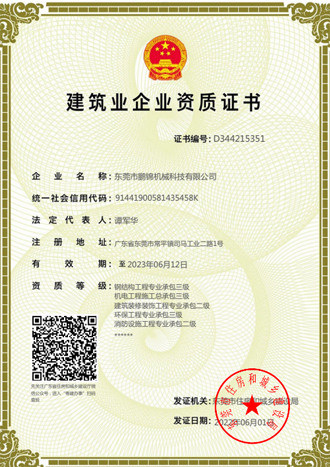
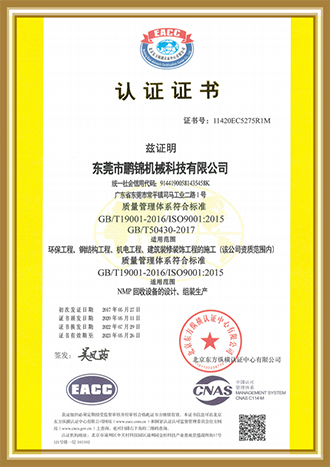
Certificates & Qualifications

Our technology and quality management systems are validated by internationally recognized certifications.

Certificate 1 - Pengjin Technology Battery Equipment
Certificate 2 - Pengjin Technology Battery Equipment
Certificate 3 - Pengjin Technology Battery Equipment
Certificate 4 - Pengjin Technology Battery Equipment

They Trust Us

For many years, we have successfully responded to the requirements of reputed customers in the market.

Complete Battery Factory Project Solutions

From electrode preparation to module assembly and pack integration — explore our full portfolio of intelligent battery manufacturing equipment for new factory projects.