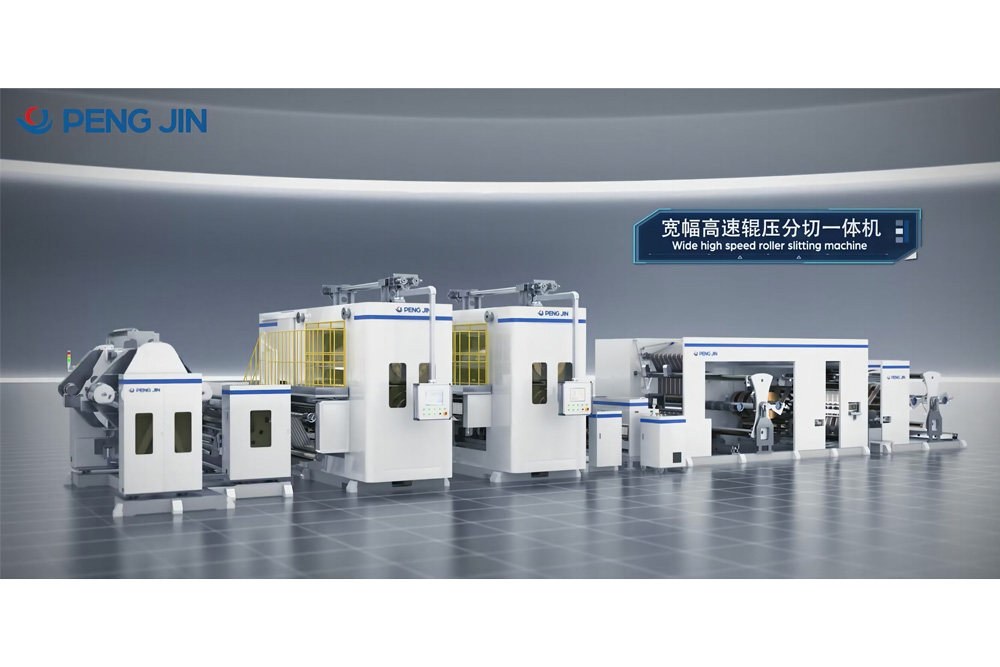
Explore our precision-engineered solutions designed for high-performance EV battery production lines.
The electric vehicle revolution is reshaping global manufacturing — and diaphragm coating technology sits at its very core.
The global EV battery market surpassed USD 95 billion in 2023 and is projected to exceed USD 380 billion by 2030, growing at a CAGR of over 20%. This unprecedented expansion directly drives demand for precision diaphragm high-speed coating machines capable of meeting mass-production quality benchmarks.
Modern EV batteries require diaphragm coatings with nanometer-level uniformity. Even microscopic defects can compromise safety and energy density. High-speed coating machines with closed-loop tension control and AI-assisted real-time defect detection have become the non-negotiable standard in gigafactory environments.
With tightening environmental regulations in China, Europe, and North America, EV battery manufacturers are adopting NMP-recovery-integrated coating systems. Diaphragm coating equipment now often integrates solvent recovery loops, reducing VOC emissions and operational costs simultaneously.
As solid-state batteries transition from R&D toward pilot production, diaphragm coating lines are being re-engineered to handle ceramic slurries, PVDF-based coatings, and ultra-thin substrates below 7μm — demanding next-generation machine precision and adaptive coating heads.
Leading gigafactories from CATL to Panasonic and LG Energy Solution demand coating throughput exceeding 120m/min with sub-±1μm coating weight variance. This raises the engineering bar for diaphragm high-speed coating machines to combine mechanical rigidity, precision die design, and intelligent process control.
Industry 4.0 integration — including MES connectivity, predictive maintenance via IIoT sensors, and digital twin simulation — is increasingly embedded within diaphragm coating machine platforms, enabling real-time process optimization and remote diagnostics across distributed production sites.
Engineered for the demands of industrial-scale EV battery diaphragm production with uncompromising precision and reliability.
💡 Key Insight: The diaphragm separator is the most safety-critical component in any lithium-ion battery cell. Its coating uniformity directly determines ion-transport efficiency, thermal stability, and the prevention of internal short circuits — making the coating machine the most precision-sensitive asset on any EV battery production line.
Advanced slot-die extrusion technology with micro-adjustable lip geometry ensures uniform wet film deposition across full web widths up to 1600mm, critical for ceramic or PVDF-coated separator production.
Servo-driven tension control with dancer-roll feedback maintains substrate tension within ±0.5N across the full speed range, preventing film wrinkling or stretching on ultra-thin polyethylene or polypropylene substrates.
Segmented drying ovens with independently controllable IR and hot-air zones remove solvent rapidly while preventing thermal damage, achieving consistent coating adhesion and porosity across the entire diaphragm width.
Beta-ray or laser-based real-time basis weight sensors monitor coating thickness continuously, feeding data back to the coating head control system for closed-loop adjustment without production stoppages.
Integrated NMP or ethanol solvent recovery systems capture and recycle over 99% of organic solvents used in the coating process, dramatically reducing operating costs and ensuring regulatory compliance with emission standards.
Embedded machine vision with AI defect classification identifies pinholes, streaks, and edge defects in real time at production speed, enabling automatic rejection marking and process parameter auto-correction for maximum yield.
Diaphragm high-speed coating machines serve diverse and increasingly specialized roles across the modern battery value chain.
For NMC 811 and NCA cathode cells targeting energy densities above 280 Wh/kg, ceramic-coated separators are mandatory. The high-speed coating machine applies alumina or boehmite dispersions at controlled weights of 3–6 g/m² per side, enhancing thermal shutdown characteristics and preventing lithium dendrite penetration at high charge rates.
Electric vehicle fast-charging architectures (≥350 kW peak) require PVDF-coated separators with enhanced electrolyte wettability. Diaphragm coating machines optimized for PVDF slurry rheology deliver precise coat weights with minimal pore blockage, directly improving charge acceptance and cycle life in automotive cells.
Grid-scale energy storage demands ultra-long cycle life batteries where separator integrity over 6,000+ cycles is critical. Coating uniformity achieved by high-speed machines directly contributes to stable capacity retention, reduced self-discharge, and extended calendar life in LFP-based ESS battery packs deployed at utility scale.
The emerging electric aviation sector, including eVTOL air taxis and UAVs, requires high specific energy batteries with best-in-class safety. Precision diaphragm coating at nanometer-level accuracy enables separator performance meeting aviation-grade safety certifications, a rapidly growing application segment for advanced coating equipment manufacturers.
As solid electrolyte composite films gain traction, diaphragm coating machines are being adapted for sulfide and oxide-based electrolyte slurry coating on metal foil substrates. This emerging application demands hermetic coating environments and ultra-precision thickness control below 10μm — defining the frontier of coating machine capability.
Battery research institutes and new entrants require pilot-scale coating machines capable of running small substrate rolls at lab-scale web widths (200–400mm) while replicating production-grade process conditions. Modular diaphragm coating platforms accelerate the transition from cell chemistry innovation to commercial production readiness.
The diaphragm coating machine sector is evolving rapidly alongside advances in battery chemistry, digitalization, and sustainability requirements.
Equipment manufacturers are pushing web widths beyond 1600mm and line speeds to 150m/min, driven by gigafactory unit economics. This demands stiffness-optimized machine frames, air-bearing rollers, and adaptive tension algorithms previously found only in paper and film industries.
Virtual machine models enable operators to simulate coating process changes — slurry viscosity shifts, speed ramps, oven zone adjustments — before implementation, eliminating costly trial runs and accelerating new product introduction for novel separator chemistries.
Driven by the shift toward aqueous-process ceramic coatings, next-generation machines must handle water-based slurries with fundamentally different drying kinetics and surface tension characteristics, requiring redesigned drying ovens and anti-corrosion machine architectures.
Battery manufacturers increasingly prefer fully integrated production lines where the coating machine communicates seamlessly with upstream slitting, downstream calendering, and inspection modules. Coating equipment suppliers are evolving into full-line systems integrators.
With global EV battery safety regulations tightening — including UN ECE R100, GB 38031, and UL 2580 — diaphragm separator performance requirements are rising. Coating machines must deliver the consistency needed to meet safety certifications across every meter of produced separator.
North American and European EV manufacturers are building local battery supply chains under policies like the US Inflation Reduction Act and EU Battery Regulation. This is creating new demand for diaphragm coating equipment deployable in non-Chinese production environments, driving internationalization of Chinese equipment leaders.
With the rapid development of the lithium battery industry, the efficient use of resources and the steady improvement of efficiency are the top priority of enterprise operation and development. Pengjin Technology adheres to the corporate mission of "driving the development of new energy recycling economy with technology" and provides more perfect NMP solutions for the majority of lithium battery manufacturers and NMP manufacturers.
On the road of circular economy, Pengjin team will take excellent steps, keep pace with time; work together for a win-win situation, and create a more efficient tomorrow. Pengjin team will be committed to NMP recycling, NMP circular economy and other resource recycling economy, high-tech development economy, and take solid steps to promote the high-quality development of new energy and realize the green, circular and low-carbon development of industries.
Guangdong Pengjin Intelligent Equipment Co., Ltd. — A National High-Tech Enterprise Specializing in New Energy Equipment Solutions
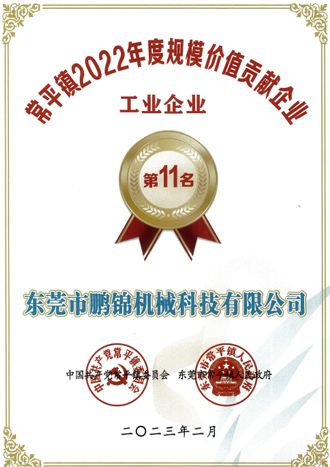
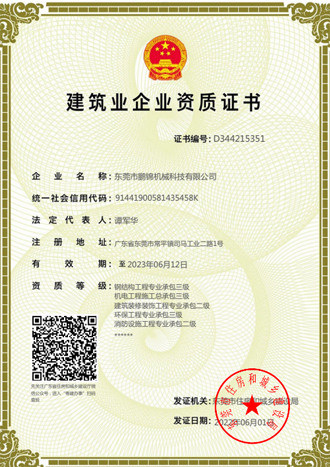
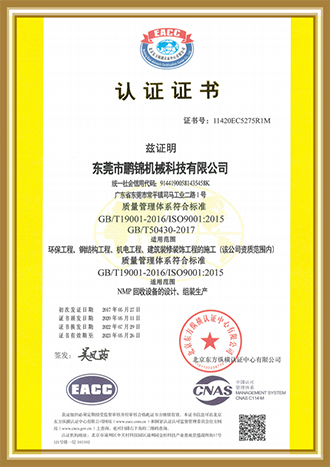
Guangdong Pengjin Intelligent Equipment Co., Ltd. (referred to as "Pengjin Technology") is a national high-tech enterprise specializing in professional equipment solutions for the new energy recycling economy. Our primary offerings include NMP recycling equipment, NMP distillation equipment, diaphragm high-speed coating machines, and more. Committed to innovation, Pengjin Technology holds 13 invention patents and over 50 utility model patents. Our team of nearly 1,000 employees, with around 20% dedicated to research and development, ensures continuous technological advancement at the forefront of EV battery manufacturing equipment.
Welcome to learn more about us
Innovative tech services for customer success and employee fulfillment
Leading new energy intelligent manufacturing
Driving the development of new energy circular economy
Honesty, pragmatism, pioneering spirit, pursuit of excellence
For many years, we have successfully responded to the requirements of reputed customers in the market.


Contact Pengjin Technology to discover how our diaphragm high-speed coating machines can transform your manufacturing line efficiency, yield, and sustainability.
Request a Consultation →Full-spectrum solutions covering every critical stage of lithium battery and EV battery cell production.