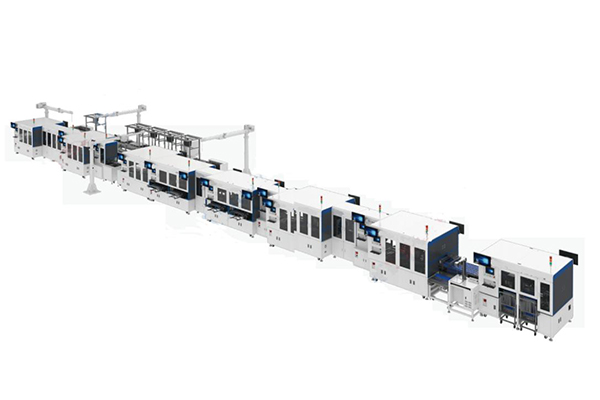
Turnkey automated production line solutions for second-life battery repurposing and recycling — engineered for performance, precision, and scalability.
The global push toward electrification and sustainability has created an unprecedented demand for intelligent battery lifecycle management. Automated pack lines are the backbone of this transformation.
As lithium battery volumes scale exponentially, manual processes can no longer meet quality, speed, or consistency demands. Intelligent automation unlocks the full value of both new and second-life battery assets.
With millions of EV and ESS battery packs approaching end-of-first-life within this decade, automated energy storage pack lines are not just an efficiency upgrade — they are a critical infrastructure investment for a sustainable, circular energy economy. Automation ensures consistent cell grading, safe module disassembly, precision re-packing, and full traceability across every stage of the battery's second life.
The industry is evolving rapidly. Here are the key technological and commercial trends shaping the future of automated energy storage pack lines for second-life and recycling applications.
Machine learning algorithms now enable real-time electrochemical profiling of retired battery cells, allowing automated lines to sort cells by state-of-health (SoH) with greater than 99% accuracy. This maximizes the yield of viable second-life cells and minimizes waste streams.
Every cell processed on modern automated pack lines is assigned a digital passport — recording its origin, charge history, thermal events, and reconditioning data. This enables warranty management, regulatory compliance, and downstream trading of second-life battery assets as verified commodities.
Containerized automated pack lines are gaining traction for their rapid deployment capability. These plug-and-play facilities can be installed at battery collection hubs, ports, or industrial parks — bringing the production line directly to the battery rather than vice versa, dramatically reducing logistics costs.
Automated lines increasingly integrate thermal imaging, gas detection, and robotic disassembly to safely handle degraded cells that pose fire or chemical exposure risks. Safety-first automation is now a baseline expectation in both second-life and end-of-life recycling operations.
Next-generation automated pack lines are designed to handle multiple cell chemistries — LFP, NMC, NCA, and emerging sodium-ion — on a single flexible platform. This future-proofs manufacturing investments as battery chemistry continues to evolve.
Modern pack lines are fully connected to cloud-based Manufacturing Execution Systems (MES), enabling real-time OEE monitoring, predictive maintenance, remote diagnostics, and production analytics — driving continuous improvement and reducing unplanned downtime.
A fully integrated automated line covers every critical stage from incoming retired battery packs to fully certified second-life energy storage systems ready for redeployment.
Automated pack receiving & visual inspection
AI-powered SoH & SoC characterization
Robotic safe disassembly & sorting
Cleaning, welding & cell balancing
Automated module & pack assembly
Full electrical & safety validation
Certified ESS & BESS ready for market
Automated energy storage pack lines for second-life and recycling serve a diverse and growing range of high-value commercial and industrial use cases.
Second-life EV battery packs, after passing automated grading and re-packing, are increasingly deployed in utility-scale Battery Energy Storage Systems. Automated pack lines ensure consistent quality standards, enabling retired EV batteries to serve 5–10 additional years in stationary grid applications — peak shaving, frequency regulation, and renewable energy firming.
Grid & Utility ScaleAutomated lines re-purpose retired EV batteries into cost-effective backup power solutions for telecom infrastructure. With billions of base stations globally requiring reliable backup, second-life battery packs offer a 40–60% cost reduction versus new batteries while reducing electronic waste — a compelling business case driven by automated production efficiency.
Telecom & Off-GridFactories, data centers, hospitals, and commercial buildings deploying energy storage for demand charge management, UPS, and microgrid applications represent a massive market for automated second-life pack solutions. Standardized automated production ensures performance consistency at scale — critical for mission-critical facilities.
Industrial & CommercialRapid charging infrastructure requires buffer storage to manage peak demand without expensive grid upgrades. Automated second-life pack lines supply cost-competitive battery buffer systems for EV charging hubs, enabling fast charging deployment at scale without prohibitive grid connection costs — directly accelerating EV adoption.
EV InfrastructureFor cells that do not qualify for second-life repurposing, automated pack and module disassembly lines feed downstream hydrometallurgical and pyrometallurgical recycling processes. Precise automated disassembly maximizes material recovery rates for lithium, cobalt, nickel, and manganese — driving significant economic and environmental value from every retired battery pack.
Material RecoveryThe residential and small commercial solar-plus-storage market is a rapidly growing segment for affordable second-life battery packs. Automated production enables consistent quality at volume — making second-life battery storage systems economically accessible for homeowners and small businesses, democratizing energy independence through circular economy principles.
Solar & Residential
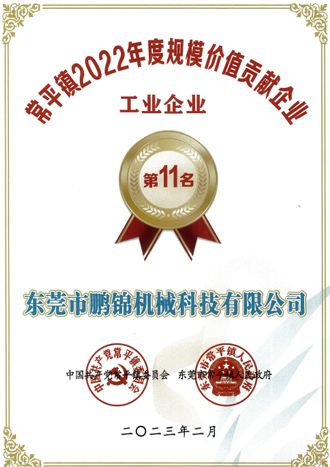
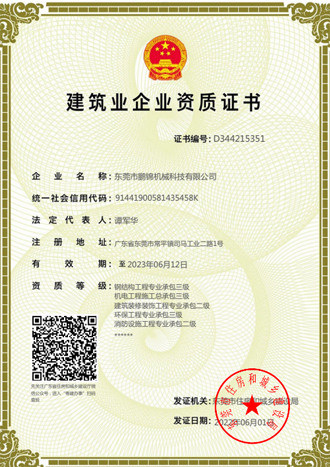
Guangdong Penjin Intelligent Equipment Co.,LTD. (Referred to as "Pengjin Technology") is a national high-tech enterprise specializing in professional equipment solutions for the new energy recycling economy.
Our primary offerings include NMP recycling equipment, NMP distillation equipment, coating machines, and more. Committed to innovation, Pengjin Technology holds 13 invention patents and over 50 utility model patents. Our team of nearly 1,000 employees, with around 20% dedicated to research and development, ensures continuous technological advancement.
Welcome to learn more about us
Innovative tech services for customer success and employee fulfillment
Leading new energy intelligent manufacturing
Driving the development of new energy circular economy
Honesty, pragmatism, pioneering spirit, pursuit of excellence
With the rapid development of the lithium battery industry, the efficient use of resources and the steady improvement of efficiency are the top priority of enterprise operation and development. Pengjin Technology adheres to the corporate mission of "driving the development of new energy recycling economy with technology" and provides more perfect NMP solutions for the majority of lithium battery manufacturers and NMP manufacturers. On the road of circular economy, Pengjin team will take excellent steps, keep pace with time; work together for a win-win situation, and create a more efficient tomorrow.
Pengjin team will be committed to NMP recycling, NMP circular economy and other resource recycling economy, high-tech development economy, and take solid steps to promote the high-quality development of new energy and realize the green, circular and low-carbon development of industries.
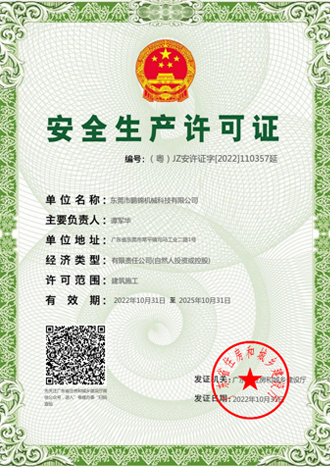
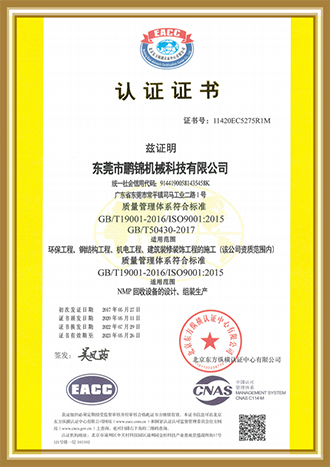
Pengjin Technology's automated energy storage pack lines meet the highest international quality and compliance standards.


Explore our full portfolio of automated energy storage pack lines — covering cylindrical, prismatic, pouch cell formats for second-life repurposing, recycling, and new energy storage applications.


For many years, we have successfully responded to the requirements of reputed customers in the market.