Precision machines purpose-built for the stringent quality standards of Germany's automotive and energy storage sectors.


A Roller Press & Slitting Integrated Machine is a core piece of equipment in the lithium-ion battery manufacturing process. It combines two critical electrode processing stages — calendering (roller pressing) and slitting — into a single, continuous, high-precision production unit.
During the calendering stage, the coated electrode foil passes through precision-engineered steel rollers under controlled pressure and temperature. This compresses the active material coating to a specified thickness and density, dramatically improving the energy density and internal conductivity of the battery cell.
The integrated slitting stage then cuts the calendered electrode web into strips of exact width, matching the cell format requirements — whether prismatic, cylindrical, or pouch. Tight width tolerances (±0.1 mm or better) are essential to prevent burrs that could cause internal short circuits.
⚙ By integrating these two processes, manufacturers in Germany can eliminate intermediate handling steps, reduce contamination risks, shrink footprint, and achieve throughput speeds exceeding 80 meters per minute — critical for gigafactory-scale output.
German battery manufacturers — whether supplying Volkswagen, BMW, Mercedes-Benz, or independent ESS operators — demand equipment that exceeds conventional quality thresholds. Our Roller Press & Slitting Integrated Machine is engineered to deliver:
Calendering accuracy: Thickness control within ±1 µm across the full web width, achieved through high-rigidity roll housings with automatic hydraulic gap adjustment and real-time feedback from laser thickness gauges.
Slitting precision: Burr height below 5 µm, achieved with tungsten-carbide circular blades, pneumatic blade pressure control, and proprietary chip evacuation systems.
Speed & capacity: Continuous line speeds up to 80–120 m/min, compatible with both NMC and LFP chemistries, aluminum and copper foils, and electrode widths from 100 mm to 1,500 mm.
Industry 4.0 readiness: Full OPC-UA data output, SCADA integration, and MES connectivity — required for compliance with Germany's Industrie 4.0 factory automation standards.
Germany is the European Union's largest economy and the continent's leading automotive manufacturing nation. Its pivot to electromobility and clean energy storage represents one of the largest capital investment cycles in modern industrial history.
Germany has committed to becoming a world-class battery manufacturing nation. Under the European Battery Alliance (EBA) framework, backed by Germany's federal government and the European Commission, over €40 billion has been pledged for battery cell and component manufacturing investments across the country by 2030.
Major domestic projects include Northvolt's planned German cell plant, ACC facilities jointly developed by Stellantis and TotalEnergies, and continued expansion at Tesla's Gigafactory Berlin-Brandenburg in Grünheide — which alone requires massive quantities of precision electrode processing equipment including roller presses and slitting lines.
Germany's established automotive OEMs — Volkswagen Group, BMW Group, and Mercedes-Benz — are each vertically integrating battery cell production into their operations. Volkswagen's PowerCo subsidiary aims to manufacture 200 GWh per year across its European gigafactories, with the Salzgitter facility serving as the anchor site. Each gigawatt-hour of annual cell capacity requires approximately 2–4 roller press & slitting integrated lines running continuously.
The EU Battery Regulation (EU 2023/1542), which took full effect in 2024, mandates carbon footprint declarations, mandatory recycled content thresholds, and digital battery passports for all batteries sold in the EU market from 2027. This regulation is accelerating investment in high-efficiency, low-waste electrode manufacturing equipment — exactly the category our Roller Press & Slitting Integrated Machines serve.
Germany's Energiewende (energy transition) policy targets 80% renewable electricity by 2030, driving unprecedented demand for stationary energy storage. Grid-scale battery storage projects — from utility BESS installations to commercial and industrial peak-shaving systems — require billions of cells produced on precisely the kind of equipment we supply.
📈 Germany's battery cell manufacturing capacity is projected to reach over 300 GWh/year by 2030, making it the single largest market in Europe for battery production equipment including roller press and slitting systems.
Germany hosts or is actively constructing multiple GWh-scale gigafactories. Each facility requires multiple roller press and slitting lines running 24/7, with Industrie 4.0 connectivity and predictive maintenance capability.
EU regulations require manufacturers to track and maximize recycled material content. Our integrated systems produce minimal electrode scrap and are designed to handle recycled active materials without loss of precision.
Germany's manufacturing sector leads globally in digital factory adoption. Our machines ship with full OPC-UA, PROFINET, and EtherNet/IP support, enabling seamless integration into German MES and ERP ecosystems.
Next-generation solid-state battery formats require adapted calendering pressures and slitting parameters. Our modular architecture allows hardware and software upgrades without full machine replacement.
German manufacturers face intense pressure to reduce cell cost below €60/kWh. Integrated roller press and slitting systems eliminate handling steps and reduce per-cell processing cost by up to 18% versus separate lines.
German OEMs require rapid field service, spare-parts availability, and CE-marked equipment. Pengjin Technology's European technical support network ensures maximum uptime for German operations.
From automotive gigafactories in Bavaria to wind-farm storage parks in Schleswig-Holstein, our equipment is deployed across Germany's most demanding battery production environments.
BMW and Mercedes-Benz battery production facilities in southern Germany demand ultra-precise electrode calendering for their high-performance NMC-811 and NCA pouch cells. Our machines deliver ±1 µm thickness uniformity and real-time SPC data output for quality assurance compliance.
At high-volume gigafactory sites such as Grünheide, electrode production runs continuously around the clock. Our high-speed integrated lines support 100+ m/min throughput with automated splicing, inline vision inspection, and ERP-connected production reporting.
Germany's industrial heartland is deploying large-format LFP battery systems for commercial and grid-scale storage. Our roller press lines handle the wide-format (up to 1,500 mm) electrode webs used in prismatic LFP cells at scale, with energy efficiency ratings suited to Germany's high electricity costs.
As Germany's recycling industry scales to meet EU battery regulation targets, our machines are configured to handle reclaimed electrode materials with variable coating densities. This enables closed-loop electrode re-processing — a growing application in Germany's thriving battery recycling ecosystem.
Volkswagen Group's commercial vehicle electrification (MAN, TRATON) requires large-format pouch and prismatic cells with extreme electrode density specifications. Our high-pressure calendering systems (up to 2,000 kN/m) achieve the compaction ratios needed for commercial EV applications.
Germany's world-renowned research institutions — Fraunhofer ISIT, Fraunhofer FFB, and KIT — operate pilot electrode lines for advanced battery chemistries. Our compact integrated machines are scaled for laboratory and pilot-scale throughput with full parameter programmability for research applications.
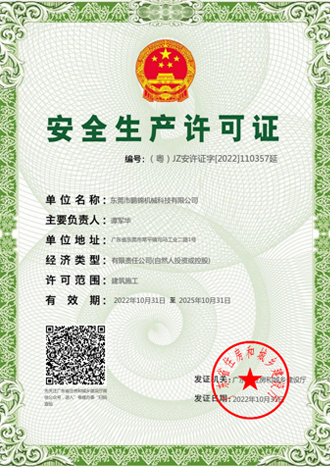
All Pengjin Technology equipment supplied to Germany and the broader EU market is fully CE-marked and complies with the Machinery Directive 2006/42/EC, Low Voltage Directive 2014/35/EU, and EMC Directive 2014/30/EU. Our machines are designed with comprehensive safety guarding, ATEX-compatible electrical components for solvent-handling zones, and documentation packages prepared for TÜV inspection.
Our engineering team works closely with German customers from the specification phase through commissioning, providing full documentation in German and English, including CE Declaration of Conformity, risk assessments, and operating manuals.
Standard lead times for our Roller Press & Slitting Integrated Machines range from 90 to 120 days from order confirmation. Our European logistics partners ensure efficient port-to-factory delivery to all major German industrial regions. On-site installation and commissioning is carried out by factory-trained engineers, with follow-on training programs for German operators.
Pengjin Technology holds over 13 invention patents specifically related to electrode processing, NMP recovery, and smart manufacturing system design. Our R&D team — comprising nearly 20% of our 1,000+ total workforce — continuously develops proprietary technologies that set our machines apart in the global competitive landscape.
For German customers, this means access to the latest in closed-loop thickness control, AI-based defect detection, and predictive maintenance algorithms — capabilities that align with Germany's Industrie 4.0 digital manufacturing leadership.
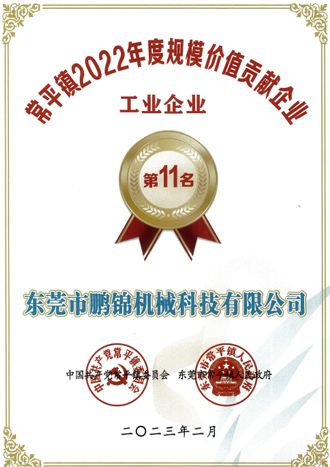
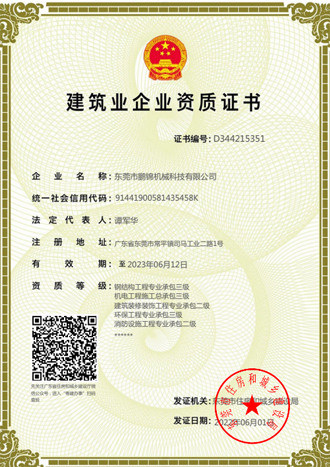
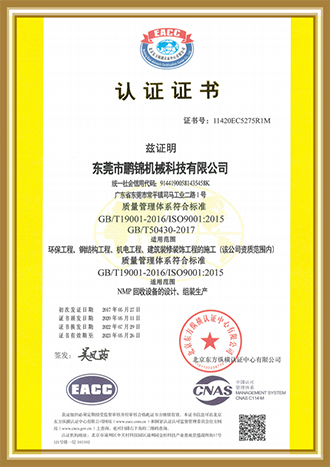
🏆 Pengjin Technology is a national high-tech enterprise recognized by China's Ministry of Science and Technology, with a quality management system certified to ISO 9001. For Germany, this translates to systematically consistent product quality backed by auditable quality records.
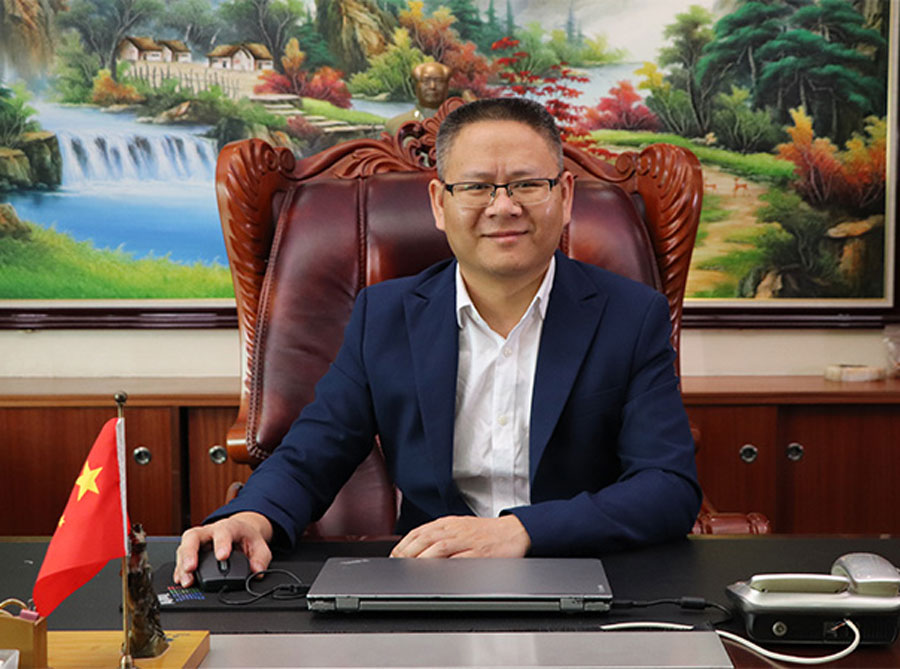
Guangdong Pengjin Intelligent Equipment Co., Ltd. (referred to as "Pengjin Technology") is a national high-tech enterprise specializing in professional equipment solutions for the new energy recycling economy. Our primary offerings include NMP recycling equipment, NMP distillation equipment, coating machines, and more. Committed to innovation, Pengjin Technology holds 13 invention patents and over 50 utility model patents. Our team of nearly 1,000 employees, with around 20% dedicated to research and development, ensures continuous technological advancement.
Welcome to learn more about us
With the rapid development of the lithium battery industry, the efficient use of resources and the steady improvement of efficiency are the top priority of enterprise operation and development. Pengjin Technology adheres to the corporate mission of "driving the development of new energy recycling economy with technology" and provides more perfect NMP solutions for the majority of lithium battery manufacturers and NMP manufacturers.
On the road of circular economy, Pengjin team will take excellent steps, keep pace with time; work together for a win-win situation, and create a more efficient tomorrow.
Pengjin team will be committed to NMP recycling, NMP circular economy and other resource recycling economy, high-tech development economy, and take solid steps to promote the high-quality development of new energy and realize the green, circular and low-carbon development of industries.


For many years, we have successfully responded to the requirements of reputed customers in the market.


Get a customized quote and technical consultation from our battery equipment specialists — tailored to your German facility's requirements.
Request a Consultation →From electrode preparation to cell assembly and testing — a complete new energy equipment ecosystem for Germany's battery manufacturers.