


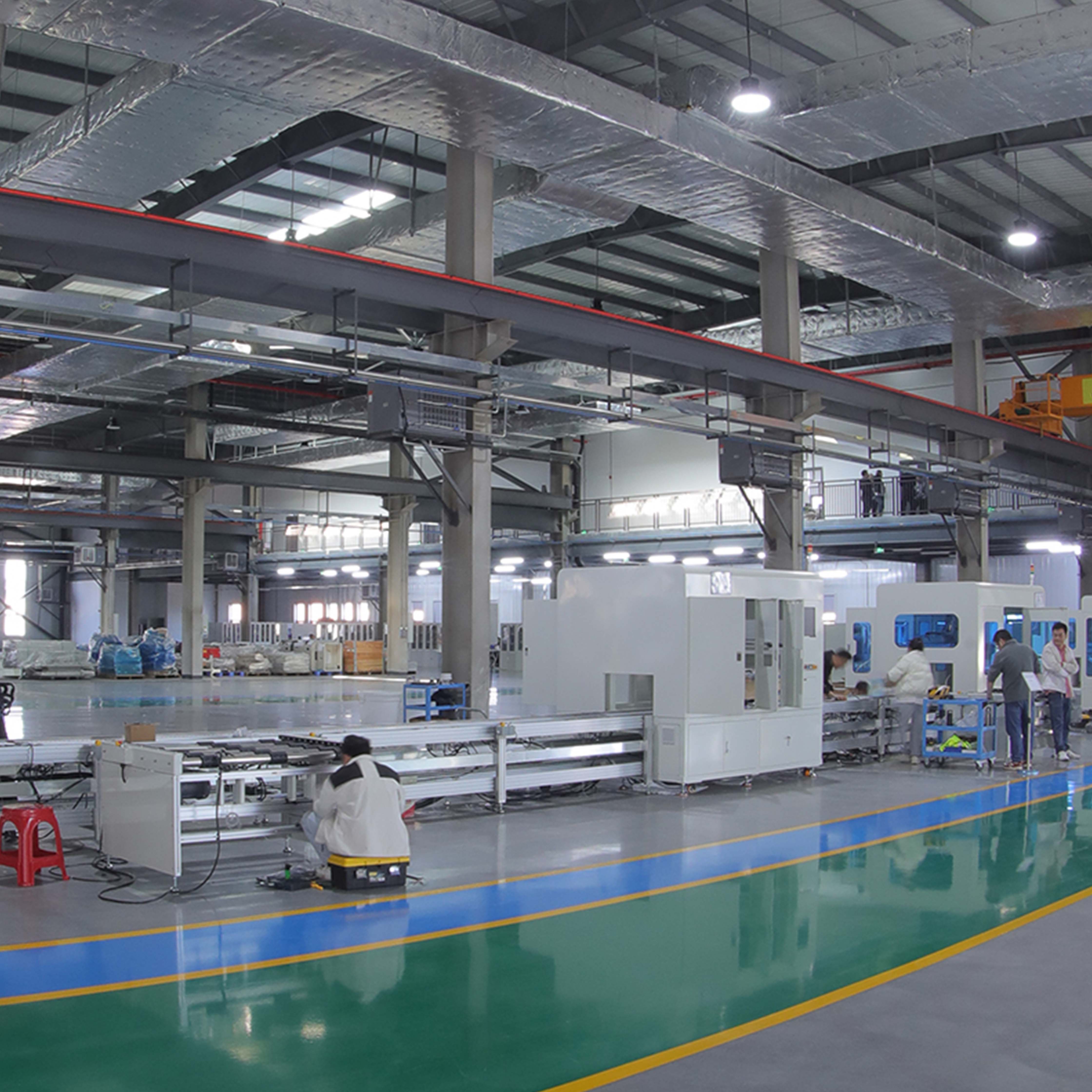
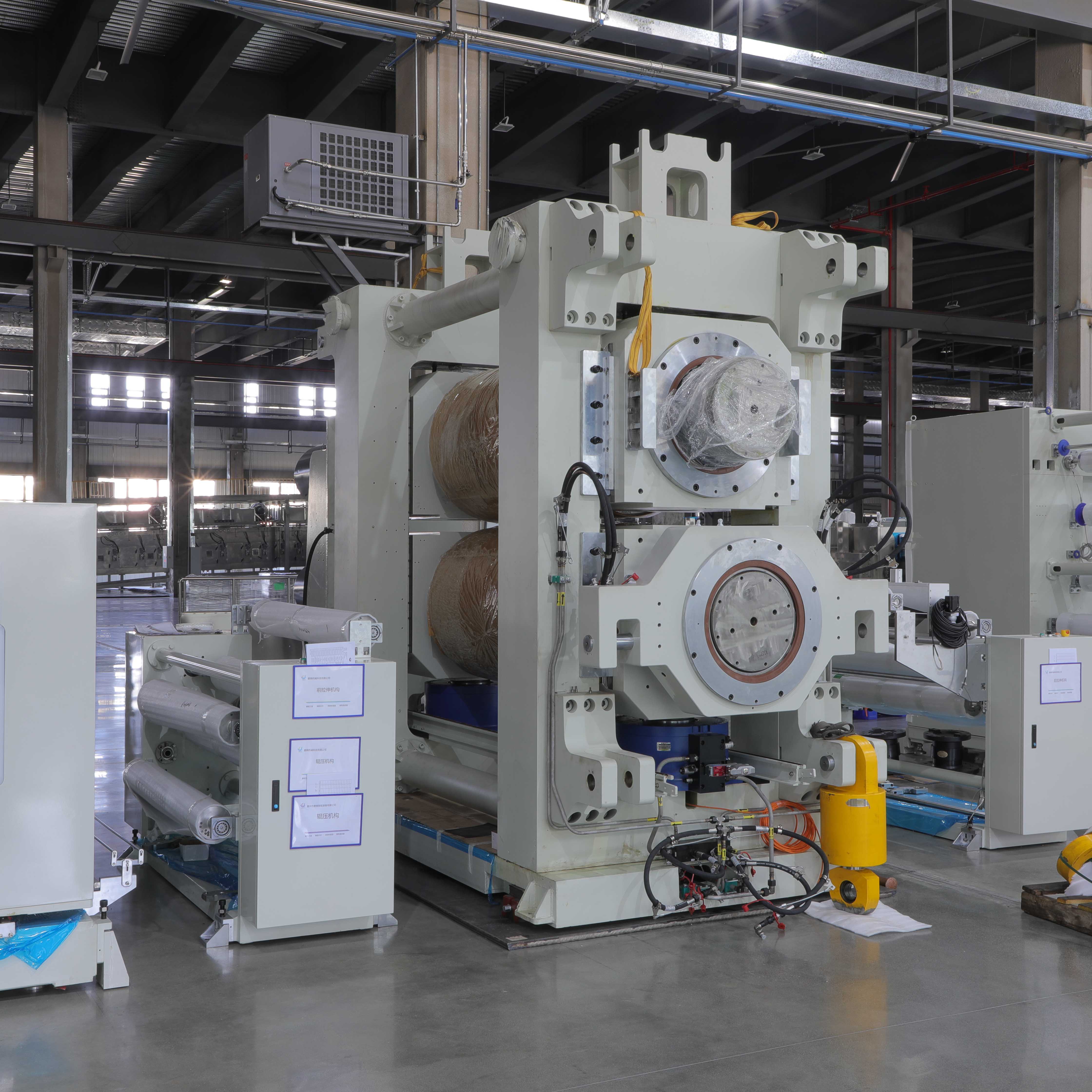


Cylindrical Lithium Battery PACK Line Process Focus: Pengjin Cylindrical Battery PACK Line — Precision Assembly and Quality Control
Cylindrical battery PACK production emphasizes precision, repeatability, and scalability. The inherently uniform geometry of cylindrical cells (e.g., 18650, 21700) supports highly automated workflows from cell handling to final PACK integration.
Cell Handling and Screening
Cylindrical cells enter the PACK line where they are automatically placed into trays or carriers and subjected to voltage, internal resistance, and polarity checks. Automated presorting ensures only compliant cells proceed, maintaining uniform module performance and reducing imbalance risks during cycling and aging.
Insulation and Component Preparation
Before module integration, insulating materials such as paper pads, PVC heat-shrink, and epoxy sheets are applied to critical contact points to prevent short circuits and enhance electrical safety. Proper insulation is a crucial step often overlooked but essential for long-term pack reliability, especially in high-vibration environments.
Module Assembly and Interconnection
Cylindrical cells are assembled into modules through precise mechanical fixtures that maintain stable cell spacing and contact alignment. Interconnection is typically achieved via nickel strips welded through automated resistance or laser welding systems. Consistency in weld penetration and strip positioning is vital for minimizing contact resistance and improving current distribution across the module.
Thermal and Structural Integration
Unlike prismatic cells, cylindrical modules benefit from more homogeneous thermal profiles due to their shape, but the PACK line must still incorporate thermal interface materials and cooling pathways (air or liquid cooling depending on design). Mechanical support structures and module frames are installed to ensure rigidity and vibration resistance under operational stresses.
BMS and Final PACK Assembly
Following module construction, the PACK assembly line integrates Battery Management Systems (BMS), busbars, high-voltage harnesses, and enclosure components. Critical validation steps include electrical continuity checks, insulation tests, and final performance verification before aging and EOL testing. Data capture and traceability are maintained via MES for quality assurance and process control.

Key Characteristics and Advantages
-
Standardized cell geometry supports high-speed automated assembly.
-
Consistent electrical and mechanical performance with reduced variance.
-
Modular design allows flexible series/parallel configurations for diverse applications.