




What is an automated battery pack assembly line in lithium battery manufacturing?
-
Introduction
In lithium battery manufacturing, cell production is only part of the process. The final performance and reliability of the battery depend heavily on the pack assembly stage.
An automated battery pack line integrates multiple processes into a continuous system, helping manufacturers improve consistency, efficiency, and production scalability.
What is an automated pack line?
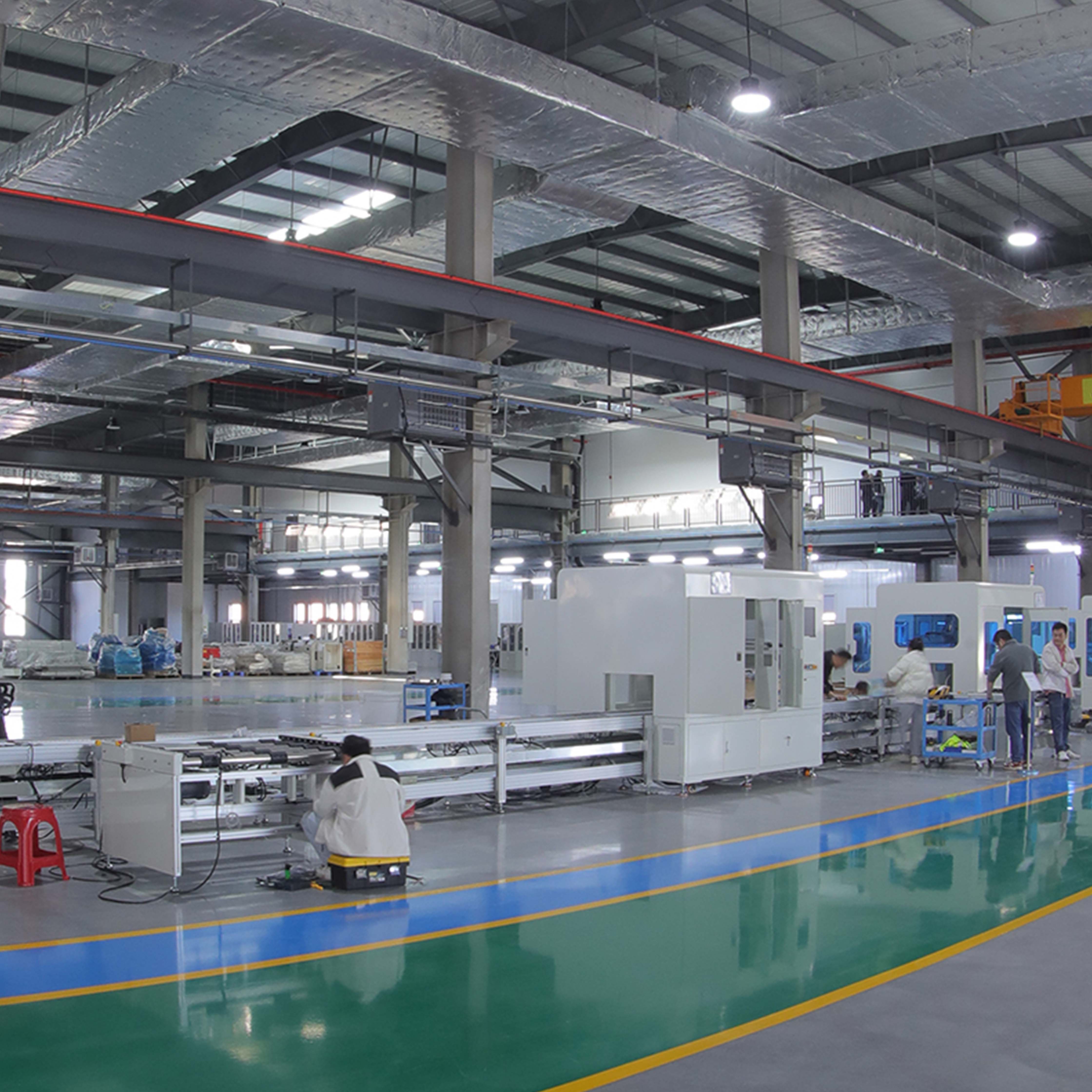
An automated battery pack line is a production system that assembles battery cells into complete battery packs. It typically includes cell sorting, module assembly, welding, testing, and final pack integration.
Its main function is to transform individual cells into standardized battery systems with stable electrical and mechanical performance.
Why is it important?
Battery manufacturers face several challenges at the pack stage:
- Manual assembly leads to inconsistent quality
- Increasing labor cost
- Higher demand for safety and traceability
- Need for scalable production
Traditional or semi-automatic lines can handle small-batch production, but their efficiency and consistency are often limited. For larger projects, automation becomes necessary to maintain stable output and reduce long-term cost.
Common pack line configurations
Different pack line designs are used depending on production scale and product type:
>Semi-automatic lines
Suitable for small-scale production or early-stage projects, but rely more on manual operation.
>Fully automated lines
Integrate robotic handling, welding, and testing systems, improving consistency and reducing labor dependency.
>Flexible pack lines
Designed to handle multiple product types with quick changeover, often used in diversified production environments.
Application scenarios
Automated pack lines are widely used in:
- EV battery manufacturing
- Energy storage systems
- Consumer electronics battery packs
They are especially important for manufacturers with medium to large production volumes and strict quality requirements.
Solution trend
As production scale increases, manufacturers are shifting from standalone equipment to integrated pack solutions.
For example, suppliers such as Pengjin provide automated pack lines that combine module assembly, welding, and testing into a unified system, helping improve production efficiency and process consistency.
Conclusion
An automated battery pack line is a key system for ensuring product consistency and scaling production.
For manufacturers planning capacity expansion or improving product reliability, evaluating automated pack solutions can support more stable and efficient operations
